
 Eli Porter
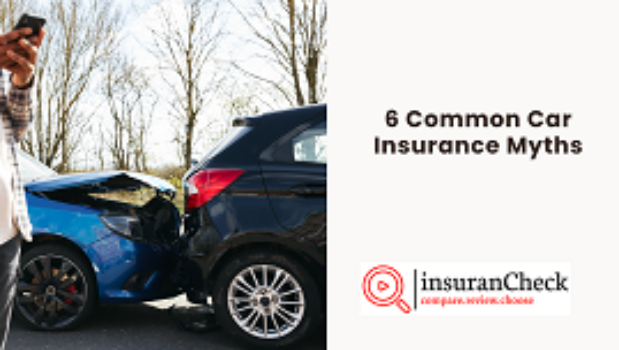
Myths about car insurance often get around like wildfire, and a lot of drivers end up deciding on coverage based on hearsay rather than genuine information. You might believe that a red car is more expensive to insure, or that your insurance will go down right after your 25th birthday. While some of these thoughts may contain a grain of truth, the majority are just incorrect. This post discusses six insurance myths that confuse drivers globally. Being aware of the facts will enable you to select more suitable insurance and avoid unexpected expenses caused by accidents. So, let’s debunk these misunderstandings, one by one.
Table of Contents
Myth 1: Red Cars Cost More to Insure
This lie is still being circulated, although there’s no reason for it in insurance pricing.
Insurance companies don’t consider the color of your car when determining your premium. They only consider the factors that are true indicators of risk and repair cost.
The Real Factors Influencing Your Price
Insurance companies set your premium based on factors including:
- The car’s make and model
- Engine capacity and horsepower
- The age and safety features of the car
- How frequently the model is stolen or damaged
- Your driving history and residential area
Being a red color alone won’t raise your insurance rates, even if you have a sports car that’s famously red. It’s the kind of car that makes the price go up, not the color of the paint. An identically-speced red and beige minivan will have the same insurance cost.
Myth 2: Personal Auto Insurance Covers Business Use
It is a common assumption that one’s personal insurance policy would protect them regardless of how the vehicle is used. However, the truth is that there is a big risk that you could be left without coverage when you need it the most if you assume that your personal auto insurance policy also covers business use.
Business Use Necessitates Different Cover
So, if you happen to be delivering food, driving for a rideshare company, or using your car for work errands, it is highly likely that your personal policy will not cover you if an incident occurs during one of those trips.
- Personal auto policies are only intended and priced for private use.
- Different kinds of risks are involved in business commuting, which is why insurers assign separate prices for such segments.
- If your policy explicitly excludes business use, then your insurer will have grounds to reject it in case of a claim arising in the course of business.
In case you utilize your vehicle to earn a side income, the best thing to do is to give your insurance agent a call and inquire about the possibility of a commercial endorsement or a rideshare rider. The expense will be negligible when compared to the cost of an accident that you would have to pay for yourself.
Myth 3: Comprehensive Insurance Covers Everything
The term comprehensive can give you the impression that it offers total protection. However, the situation is very different when it comes to this type of insurance.
Comprehensive insurance is your friend when your car suffers damage resulting from causes other than an automobile accident. It is not designed to give you a collateral-free vehicle in case your wear and tear or mechanical failures are not up to standard.
What Comprehensive Insurance Actually Covers
| Covered by Comprehensive | Not Covered by Comprehensive |
| Theft of your vehicle | Engine failure from old age |
| Vandalism or break-ins | Worn brake pads |
| Fire damage | Transmission problems |
| Hail, flood, storm damage | Routine maintenance |
| Hitting an animal | Battery replacement |
When it comes to your transmission grinding or oil leaking, that is basically a maintenance issue rather than something you can file a claim for insurance. Comprehensive insurance is intended to cover you in situations where a sudden, unexpected event occurs. It will not cover the natural wear and tear of your vehicle.
Myth 4: The State Minimum Coverage Is Enough
Whenever a driver is behind the wheel, minimum liability insurance coverage is generally required. On the other hand, it is understandable that many people assume that a minimum coverage plan is the best option.
Why Minimum Coverage Falls Short
Only having the required minimum policy to protect yourself could be a mistake since it leaves you financially exposed in the following three ways:
- The cost of a severe accident would very likely exceed the minimum liability limits.
- If you go beyond the coverage limit, you will have to find the money yourself.
- Minimum policies will only cover third parties; those policies do not cover your own car damages.
- Once in a while, serious accidents give huge medical bills that cannot be paid with minimum limits.
To be sure, a small impact may stay with the minimum coverage you have. If a large accident or a car getting injured is involved, then minimum won’t be enough. Ensure you talk to your agent about getting an upper limit to protect your assets.
Myth 5: If Your Car Is Totaled, Your Loan Gets Paid Off
The danger of this misconception is that it may come as a total surprise right when you are most in need of assistance.
In case your car is totally damaged and cannot be used anymore, the insurance company will make a compensatory payment only for the current value of the car, not what you paid initially or still owe.
The Gap You Might Not Know About
Problems start here if you own a leased or financed vehicle:
- Automobiles depreciate in value the minute they are driven off the dealership.
- The amount of your loan may often be more than the current value of your car.
- Your insurance settlement will only go as far as the market value of your car, not what you owe to the lender.
- If you want to avoid ending up with a large unpaid balance, gap insurance will protect you. However, this would be at an additional cost.
Gap insurance is the solution to this problem as it helps you cover the actual value of your car and your outstanding loan. Besides, if you decide to purchase the car with a loan or lease, you should find out if the insurer offers gap coverage and what it will cost to add the coverage.
Myth 6: Older Drivers Always Pay More
It is typical for people to believe that insurance premiums eventually increase with age. Actually, the opposite is the case for most drivers well past their twenties.
Why Age Alone Doesn’t Raise Your Rate
Several reasons exist why insurance companies consider mature, seasoned drivers as a lesser risk:
- Generally, these drivers lead a less mobile lifestyle than the young ones; they drive less and have less risk on the roads.
- Another factor is that these drivers will have a significant record of excellent driving for years.
- In addition, after completing a specific driver training course, a human of a certain age may get a discount for being a safe driver.
- Besides, statistically, they are less likely to be involved in risky driving situations.
Even though senior drivers might have their rates increased due to slower reaction times, many don’t realize that this happens well beyond the time they expect. Most premium increases are for drivers under the age of 25, contrary to popular belief that they are for drivers over 55.
How to Spot a Car Insurance Myth on Your Own
Many myths have similar characteristics. Figuring out how to identify them is a great start to protect yourself against being duped into a new myth.
- It states something so simple that you wonder how it can be true when insurers use hundreds of variables for calculation.
- It is hearsay or a forum post instead of policy documents.
- It goes against what your agent or the insurer’s website states.
- It is old and hasn’t been updated for years, but insurance rules are always changing.
When you are not sure, look at your actual insurance policy or get in touch with your insurance company. Making a call for five minutes could save you from making a wrong assumption, which may turn out to be very costly.
Final Thoughts
Car insurance myths don’t just spread; they also sound reasonable. A red car stands out, so it seems more of a risk. Comprehensive should cover everything. Minimum coverage is enough, isn’t it? These are just guesses of how insurance works and don’t match the reality of risk assessment and pricing by insurers.
The easiest and best way to steer clear of such myths is to read your policy thoroughly, make inquiries, and compare your different options using actual figures rather than going by rumors.
Interested in finding out the real cost of personalized insurance coverage? Get an accurate and fact-based quote at Insurancheck.com — it’s the opposite of a myth.