
 Eli Porter
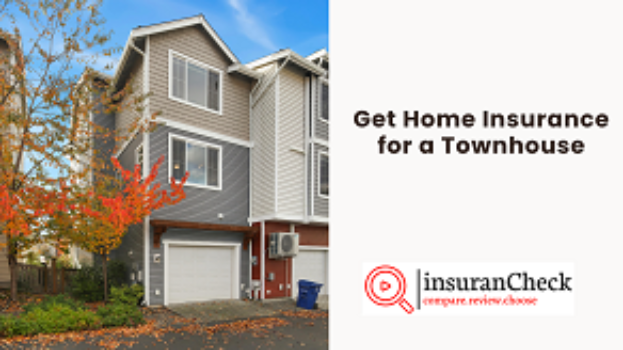
Owning a townhouse can be a different experience from owning a fully detached house, so you need to ensure your insurance also reflects this difference. A home insurance policy for a townhouse will still cover your unit, belongings, and liability, but some aspects around shared walls and the shared-use property will determine what you really need to protect. In many townhouses, especially those built in recent times, the building is designed as a multi-family unit, and the HOA carries a master policy. This policy provides coverage for the structure of the building and the common areas such as the hallways, elevators, and the building exterior.
The rest of the coverage is up to your personal policy, so that combined, we both cover your entire home. The following breakdown is a brief explanation of what is generally included in a townhouse policy and how it differs from the home insurance policy.
What Is Home Insurance for a Townhouse?
Essentially, a townhouse policy is commonly referred to as an HO6 policy, and it protects the parts of your home that your HOA master policy didn’t cover. This usually covers you for damage to your internal walls, floors, fixtures, personal belongings, and also your liability insurance.
Your policy doesn’t replace the HOA master policy; it just covers the other things.
Together, the policies will help you figure out where your coverage starts in your part and where the HOA’s ends in theirs.
Why This Matters More Than People Think
Buyers often think that an HOA fee will cover everything building-related, even as far as their interior walls.
This belief is a major source of insurance gaps and is quite common. Imagine a leak happens when a pipe bursts in the walls of your kitchen. The master policy might only cover the part up to the bricks. Then, your own policy would step in to cover your interior, the damaged cabinets, and the flooring.
Townhouse vs Condo vs Single Family Home Insurance
Each dwelling type bears a particular set of joint and individual responsibilities that ultimately affects the scope of your insurance policy.
- The homeowners’ policy, or the HO3, includes everything like the house structure, land improvements, and the furnishings since the owner doesn’t have a share of the building.
- On the other hand, a homeowners’ policy covering a townhouse or condo, also called an HO6, covers the owner just as well, but the owners’ association usually takes care of a larger part of the property, sometimes even up to and beyond drywall.
- In this light, an HO3 policy for a townhouse would be quite different since it has fewer joint responsibilities compared to an HO1 policy for a single-family home. HO3 and HO5 policies typically cover most of the structures and improvements made on the land, including any changes on the premises that are made as a result of new construction.
You will get details about the type of coverage by asking your HOA what category their master insurance fits into. For example, bare walls coverage or single-entity coverage are two types of coverage in which you, as the individual property owner, only take a very limited amount of responsibility, whereas the all insurance coverage type is the opposite happens.
What Does a Townhouse Policy Cover?
A typical HO6 coverage plan includes a limited set of items. Below is a table that shows you what is included quite easily.
| Coverage Type | What It Covers |
| Dwelling (interior) | Walls, floors, fixtures inside your unit |
| Personal property | Furniture, electronics, clothing, and other belongings |
| Liability | Injury or damage claims from guests or neighbors |
| Loss of use | Hotel or rental costs if your unit becomes unlivable |
| Loss assessment | Your share of an HOA claim that exceeds the master policy limit |
In case you find yourself in an insurance situation, you might want to check if some of them offer additional coverages in case of water backup losses, identity theft, or valuable items such as jewelry. Before you decide to go with your main policy, make sure you enquire about these add-ons to see what they entail.
Steps to Get Home Insurance for a Townhouse
This guide will walk you through the steps that will help you land an adequate house insurance for your townhouse. If you follow them step by step, you will manage to steer clear of many of the common buyer mishaps.
Check Your HOA Master Policy First
Inquire with your HOA board if you can have a copy of the master insurance policy for the place in which you live. Determine through this document what the exterior areas are covered by the insurance and where your own responsibility kicks in. Simply by doing this, you are assured that no gaps or overlapping coverage happen. As a by-product, it becomes clear what the level of dwelling coverage is at which point you have purchased your insurance.
Compare Quotes From Multiple Insurers
You should remember that the cost of coverage can be very different across insurance companies. At least three quotes should be requested for comparison purposes, where factors such as deductions as well as pricing can both be considered. The risk of having to pay a larger premium as a result of filing the claim could easily overshadow the benefit if your premium was low, but your deductible was high.
Pick the Right Coverage Amount
Calculate the worth of all the stuff that you possess at home as well as the cost of reconstruction of the interior of your townhouse. The personal property and dwelling portions of your insurance policy should be based directly on these figures. If you are not sufficiently covered, this is what it is like being uninsured: you have to spend your own money on the cost of the repair or replacement.
Ask About Loss Assessment Coverage
It can happen that due to a large insurance claim from another owner, your association will have to pay a share of the loss out of pocket. This coverage is supposed to be on your behalf. As a matter of fact, many homeowners choose not to buy this coverage, and later on they find out to their great cost. That happens especially when the roof or plumbing claim is big, and the house is old.
Read the Fine Print on Exclusions
In almost all kinds of insurance, it is a practice that they state explicitly the things that will not be covered under their policies. These excluded items include damages by flood, quake, and mold. In fact, most insurance policies do not cover these. The local authorities where you live can be contacted about a risk level so that if it is determined you will need to protect against one of these risks, a separate policy could then be taken out for that purpose.
What Affects Your Premium
The premium you pay is the result of several factors.
- Flood or wildfire zones
- Your claims history and insurance credit score
- Building age and condition
- Choice of deductible and insured amount
- Features like alarm systems or smoke detectors
- Building size and construction material
Because of differing insurer assessments, you might find that the same insurance coverage would cost a different amount if you got it from two different insurance companies. Another very important reason to compare is that the difference between the two might be very small.
Common Mistakes Townhouse Owners Make
In fact, the new houseowner of the townhouse always makes some of the same mistakes over and over again.
- Believing the condo association insures interior damages while they only covers the outer structure of the building.
- Overshooting the insurance coverage of personal property as a quick way to make savings online.
- Choosing to lose assessment coverage to save a few dollars every month
- Not recalling to add the increased coverage after renovation of kitchen or bathroom
Lots of these errors become apparent at a time when you least expect them – like immediately following a claim when the money gap between the coverage and the damage suddenly gets you.
Tips to Lower Your Cost
You can also get rid of your insurance expenses by buying a townhouse insurance policy along with auto through the same insurer. It is wise to keep a certain amount of money set aside just in case, and thus increasing your deductible amount could save you some money each month.
If you are planning to add safety features such as installation of smoke detectors or burglar alarms, not only do you protect the people in the house, but at the same time you get to save money by way of further discounts and benefits from these insurance measures.
Paying your bill in one go instead of monthly is another way to reduce the total amount you pay and is a small saving. To learn about every available discount, talk to your insurer, as most discounts will not be advertised unless you specifically ask for them.
Related: Does Home Insurance Cover a Flooded Basement?
A Quick Checklist Before You Buy
Once more, before you sign on the dotted line, run through this short checklist of items.
- Is there a copy of the HOA master policy in your possession?
- Is your dwelling coverage equal to the cost of rebuilding your interior?
- Is the personal property limit on your policy aligned with what you actually own?
- Do you have coverage for loss assessment?
- Have you found at least three quotes to compare?
If all the squares on the list above are ticked, then you are just about to get the policy that really protects you and not just one that has great paper features.
Get the Right Coverage Today
A townhouse is characterized by shared walls and mutual duties, so your insurance policy has to accurately capture this. Review your HOA master policy, get several insurance quotes, select the coverage limits that match your real costs, and together these steps will not only protect your home but also your finances while saving you from any heartburn the moment you actually have to make a claim.
Go to Insurancheck.com now to compare townhouse homeowners insurance quotes among leading providers and discover the perfect policy for your home and lifestyle at the right price today.