 Insurance specialist
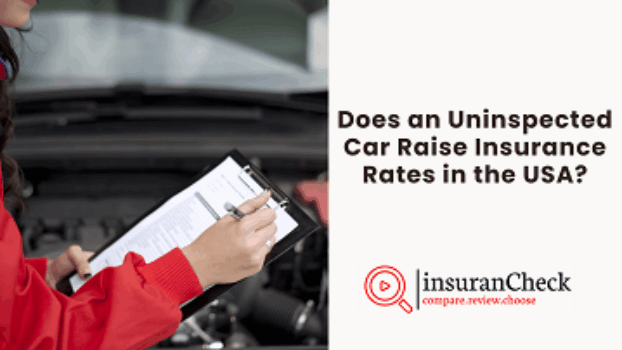
Whether insurance is increased in USA by an uninspected car is a burning question to the owners of the cars, yet the cost of the auto insurance keeps on increasing. It is estimated that the average auto insurance in the U.S. will rise to $2,101 per year by 2025, compared to a gain of 7.5% over 2024. High financial interest makes it imperative to know how vehicle check-ups, or absence of vehicle check-ups, affect insurance rates.
This article discusses the connections that exist between uninspected car and insurance premiums including regulations in different states, car and contract insurance policies and the possible ramifications to drivers. We are going to respond to the keyword uninspected car raise insurance by looking into how lack of proper vehicle inspection can affect the costs and claims in the U.S. reality.
Table of Contents
What are Vehicle Inspections in the USA?
In most parts of the United States, cars must undergo a vehicle check as a requirement of the law to eliminate the effects of cars on the road. Such inspections normally examine critical parts in vehicles like brakes, tires, lights and suspension in order to ensure that the vehicle is road worthy. The U.S. Department of Transportation reported that 35 states and the District of Columbia require some form of periodical safety or emissions check, (but by far not all states have the same requirements). Example, there are states that require annual safety and emissions checks such as New York and Massachusetts but there are those that do not need any inspection check like Florida and Michigan.
Non-compliance with the inspection requirements may involve a penalty in form of fines, suspensions of registration or even a moving violation in certain states like Mass, where operating an inspected vehicle may translate into an incident which can be charged to the insurance premiums. Inspections are mostly carried out with the aim of increasing safety on the road through detection and remedy of the probable defects in vehicles before they can lead to road accidents. The question however arises: does uninspected car necessarily mean that insurance rates are increased?
The Insurance Company’s Perception of Uninspected Vehicles
The insurance companies use a risk assessment to dictate the premiums, and failure to inspect a vehicle may indicate a risky situation. Although the majority of insurers will not openly increase premiums simply because the show sticker is not valid, the penalties that may be imposed as a result of the driver operating an unchecked vehicle will indirectly impact insurance rates.
Here’s how:
- Claims Processing problems: In event of an accident involving a car that was not examined, insurance companies would complain that the concerned car has a collapsible condition. Some of the policies demanded genuine inspection so as to be covered physically “damaged coverage” (collision or comprehensive). Without not one of them, coverage might be withheld or bailed off all repairs and the policyholder would have to take the burden in out-of-the-pocket expenses. As an example, in New York, non-obligation of the inspections which must be conducted may lead to suspension of a physical damage insurance, until a passenger car was passed over accessory.
- Surchargeable Incidents In Massachusetts and other states, driving on an uninspected vehicle is a moving violation in that state, and may be a carrying offense on a driver record. Insurance companies would normally conduct driving records when renewing the policy and it is possible that a ticket issued based on to an uncheck vehicle can attract a surcharge which is a circumstance that increases the insurance policies. Using Massachusetts state as one example, the state is aware that an auto which is not well inspected is likely to cause a surcharge event, which has direct bearing on the insurance.
- Perceived Risk of Unsafe Vehicles: Even an uninspected car may be involved in the undetected safety issue, e.g., in brake failure or underной tyre that causes the appearance of accidents. In case an accident occurs, and it proves the vehicle was at fault due to its condition, the driver will become liable or at-fault in which case liability or at-fault coverage will rise over time with payment of higher premiums. In a 2024 legal analysis, it is stated that having a part failed inspection does not always raise a presumption of fault but a defective part of which a driver is aware is likely to work against him in a crash, raising potentially the question of his insurance costs.
Factors That Influence Insurance Rates Beyond Inspections
Lack of inspection on a car can in one way increase the insurance, but it is normally more serious to the pocket of the insuranceholder by other factors involving its cost. These include:
- Driving record: Insurance premiums typically depend more on accidents, tickets or other such violations than they depend on inspection status. As an example, one accident with a fault can lead to the rise in premiums up to 20-40%, and the effect of an inspection violation will definitely stay behind.
- Credit Score: In places where it is allowed in states with the option, a lower credit score can result in an increase in the premiums of up to 17%.
- Vehicle Type: Newer, high-tech or electric vehicles regularly demand higher insurance premiums due to their costly repairs. For example, Tesla Cybertruck insurance in 2025 is 23% higher than gas car insurance.
- Coverage Level: While full coverage of the car (including both collision and comprehensive) costs, on average, $2,571 per year, a liability coverage of $619 per year is still the cheapest decision.
- Location: Urban areas having high rates of accidents or severe weather threats become the basic reason why higher premiums belong to rural parts of the country.
From this list, we may assume that a not outdated vehicle inspection report is only one of the many risks an owner may face.
Strategies to Mitigate Insurance Costs
To avoid potential premium increases related to an uninspected car, drivers can take proactive measures:
- Schedule Regular Inspections: Make sure you do not miss inspection time, ensuring that your car is legal and you are not affected by problems in the insurance policy and the car. In places like New York, the inspection is free, so there’s no need to worry about the cost of doing the necessary inspection.
- Review Your Policy: Inspect the insurance policy to find out whether it requires a valid inspection for physical damage coverage. Progressive may be lenient, but some may even cease the insurance coverage for the vehicles that never got it in the first place.
- Shop Around for Quotes: You may enjoy an annual saving of about $2,436 if you compare multiple companies’ quotes, especially in the case of an increase in rates due to a violation or a claim.
- Leverage Discounts: A handful of insurers grant discounts like 10-15% for safe driving, 20% for low mileage, and a maximum of 25% off the policy if one would bundle their policies with them, which are potential sources of income that can serve to counteract the likelihood of an increase in the premium due to the inspection-related issues.
- Address Vehicle Issues Promptly: If you have not done the inspection and failed it, then repair the car issues without any delay to avoid driving without the inspection, which certainly results in the fact that fines and the situation claim complicated.
Conclusion
Does an uninspected car raise insurance rates in the USA? The answer is that an uninspected vehicle might not raise your premium directly in most cases, but the aftermath of an unapproved inspection, thus driving an uninspected vehicle (such as fines or increased accident risk), might lead to a spike in charges.
Some states, such as Massachusetts and New York, enforce inspection law violators to have surcharge or limitation of coverage; hence, legal vehicle know-how should be the order of the day. Car owners with regular inspections, checking their insurance policies, and wishing to save on competitive rates can still save money on an uninspected car, whereas the upsurge of the cost of insurance in 2025 calls for one to stay on top of the upkeep of the car as well as compliance as a measure to prevent costs from increasing. compliance as a measure to prevent costs from increasing.